Drawing your flow
A flow can be read back without running it, so a page that documents or draws it is built from the same objects that run in production, and never goes out of date.
Read it back
<?php

$flow = CheckoutFlow::build();

echo $flow->getName(), PHP_EOL;

echo collect($flow->getHubs())
    ->map(fn ($hub) => sprintf(
        "  %s: %s (%d rules%s)",
        $hub->getName(),
        $hub->getDescription(),
        count($hub->getPipes()),
        $hub->getSkipIf() ? ', can be skipped' : '',
    ))
    ->implode(PHP_EOL);
Checkout
Validate the order: Is this a complete order for items we can actually ship? (4 rules)
Fraud screen: Does this look like the real cardholder? (3 rules, can be skipped)
Charge: Take the money, only for orders we will ship (2 rules, can be skipped)
Fulfil: Reserve stock, tell the warehouse, email the receipt (3 rules, can be skipped)What you can read
PipeManager:getName(),getDescription(),getHubs(),getThen(),getOnError(),getOnFatal(),throwsFatals(),persistsLogs().PipeHub:getName(),getDescription(),getPipes(),getSkipIf(),getSkipIfReason(),getThen(),getOnError(),getOnFatal(),getEvents(),stopsOnlyThisHubOnFatal(),treatsErrorsAsFatal(),isSkipped(),throwsFatals(),persistsLogs().- A rule class:
$nameand$description, as static properties.
What it looks like
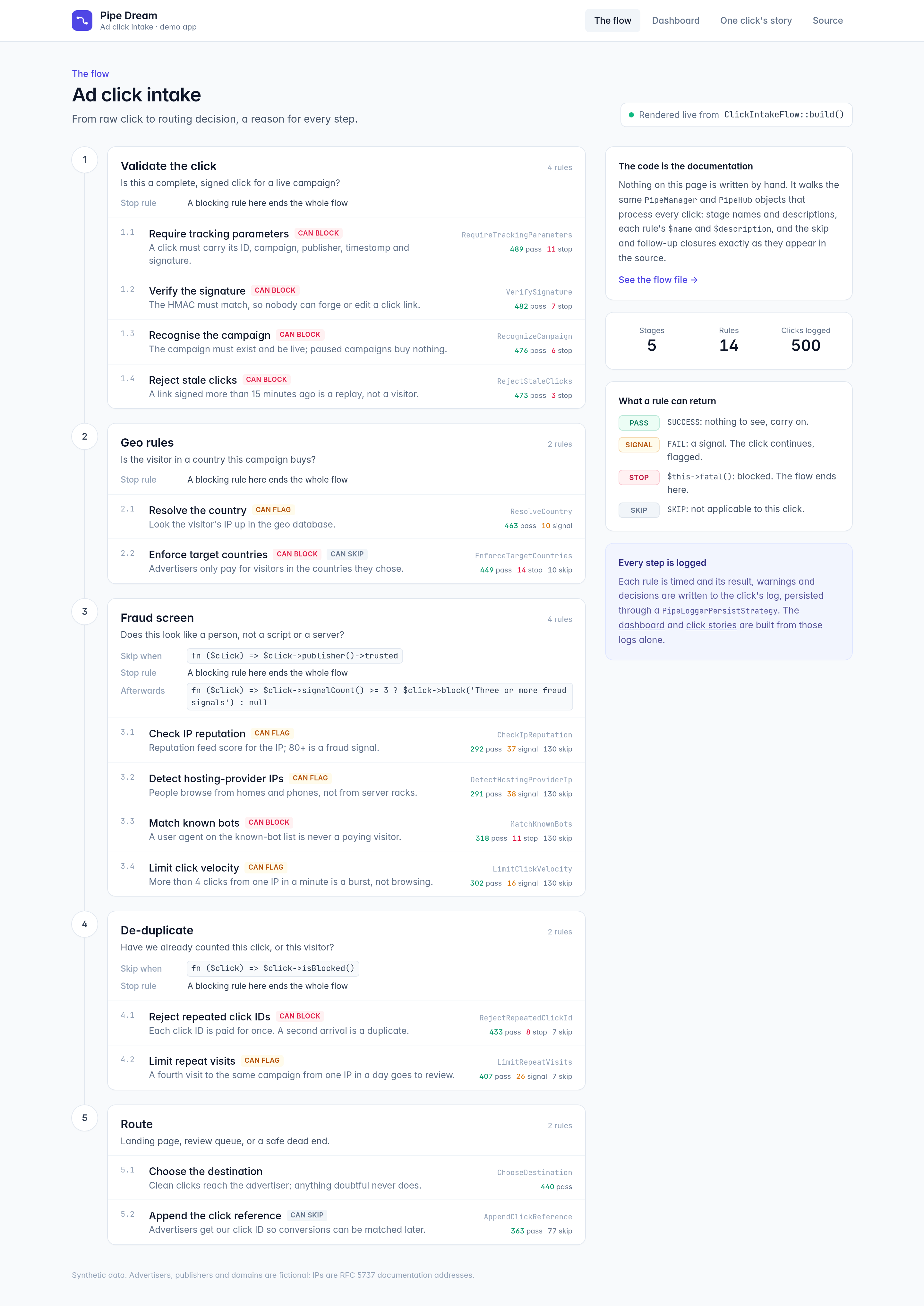
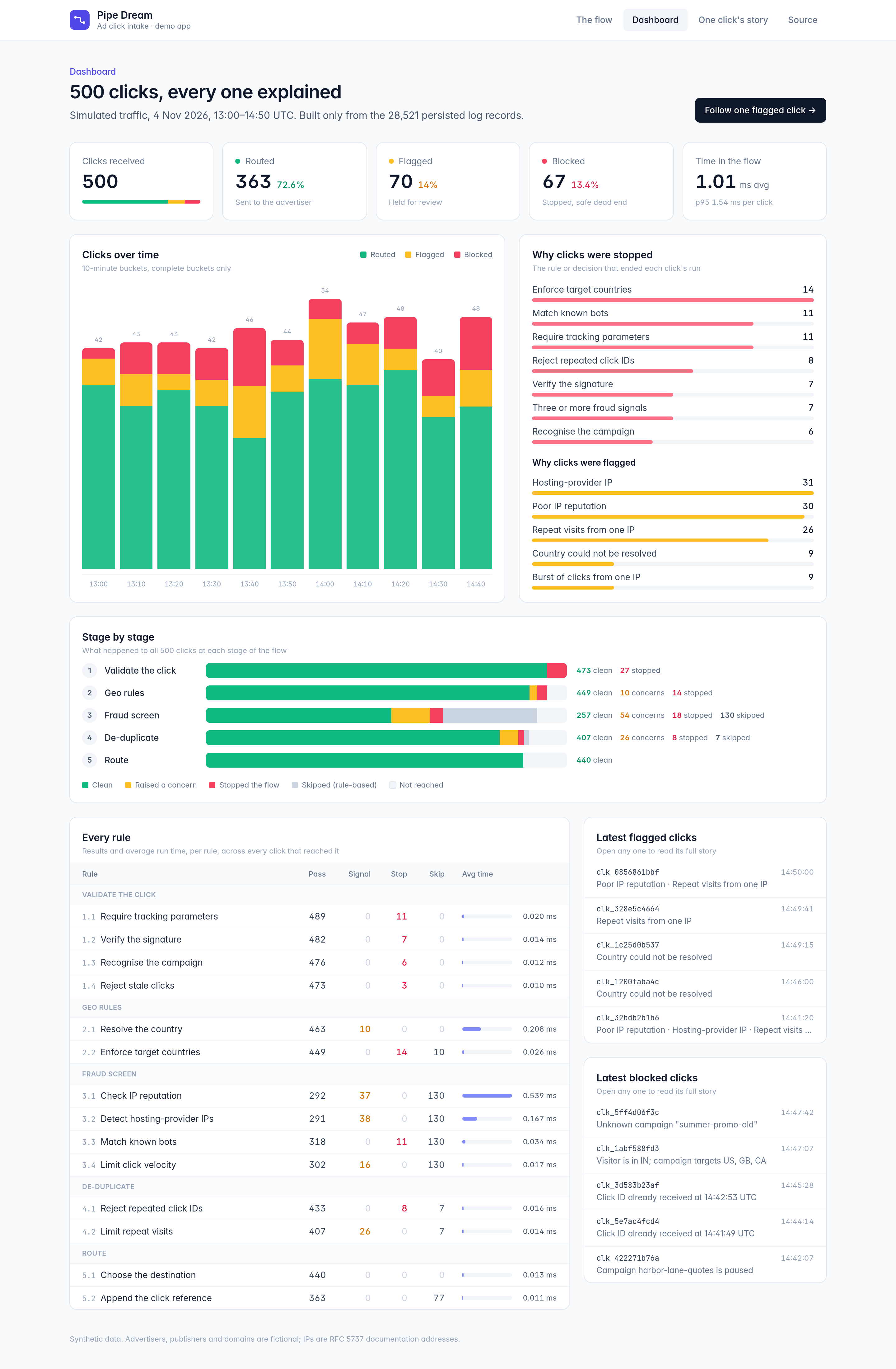
The click-intake demo renders its flow page from the flow definition, and its dashboard from saved runs, with nothing written by hand:
Next: A full checkout.